 IT

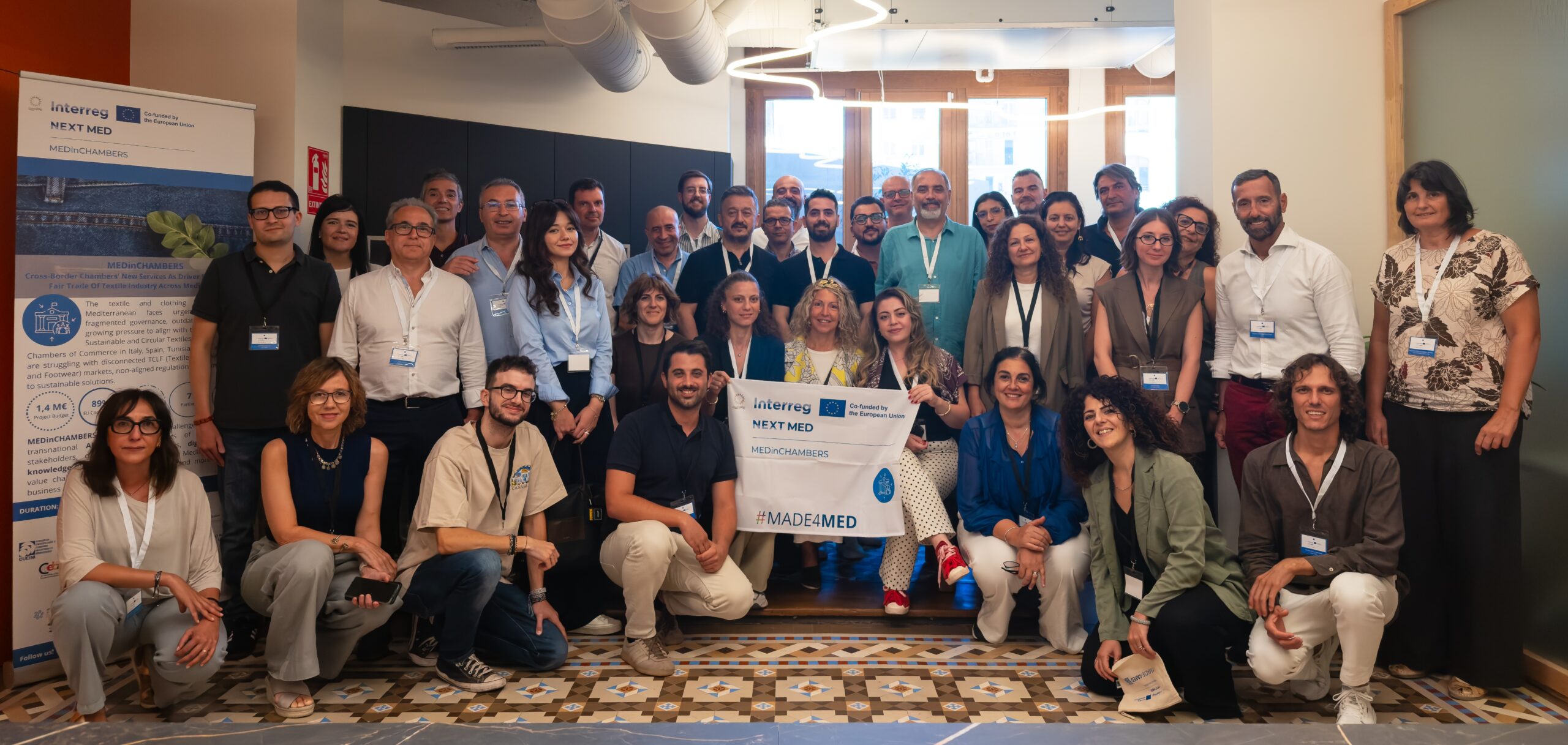
From 15 to 17 September 2026, Barcelona hosted around 40 participants from six Mediterranean countries for the Cross-border Bootcamp and Matchmaking Study Visits of MEDinCHAMBERS, a project funded by the European Union through the Interreg NEXT MED Programme and coordinated by CUEIM – University Consortium for Industrial and Managerial Economics, as Lead Partner.
Hosted and organised by the Italian Chamber of Commerce in Barcelona, a project partner, the Bootcamp brought together participants from Spain, Italy, Greece, Tunisia, Egypt and Türkiye for three days of training, exchange and field visits.
The activities focused on the green and digital transition of the textile, clothing, leather and footwear (TCLF) sector, with particular attention to the needs of small and medium-sized enterprises (SMEs) and the tools to support them through the changes underway. These include alignment with the EU Strategy for Sustainable and Circular Textiles, which directly affects European companies and, indirectly, non-EU companies operating on the EU market, within value chains that are now closely integrated with European businesses. The initiative involved businesses, business support organisations, sector operators and other stakeholders working to improve the sustainability of TCLF value chains.
The programme combined training sessions, practical exercises, group work, networking and visits to organisations and facilities within the local production ecosystem, enabling participants to move from discussing key challenges to exploring practical solutions.
The initiative also provided an opportunity for the network of Italian Chambers of Commerce Abroad to meet and exchange experiences, alongside other project partners and business support organisations. The participation of Chamber organisations active in different Mediterranean countries strengthened the programme’s transnational dimension and encouraged dialogue across different markets, areas of expertise and business environments.
Training and exchange based on real-life cases
The training activities took place at AMBIT Hub in Barcelona and were led by trainer Anna Bacardit and TCLF expert Sílvia Sorolla Casellas.
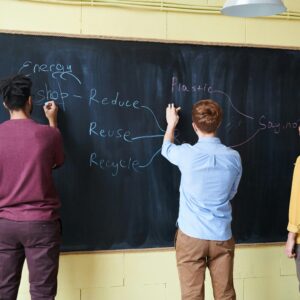
The first day focused on key sustainability issues in the TCLF sector. The morning opened with an interactive activity and a group exchange, which brought out participants’ perceptions and priorities. In a hands-on workshop, teams then built a shared map of the environmental challenges affecting the value chain and presented their reflections in plenary.
In the afternoon, a case-based session explored the main production hotspots in the TCLF sector and the improvement levers available to businesses. The exchange among participants from different countries and segments of the value chain showed how the same challenges arise with different intensity and priority depending on the context, and helping identify solutions already tested in other contexts that could be transferred.
Study visit to Igualada
On the second day, participants left the training room for a study visit to the Igualada Leather Cluster, a Catalan area with a long-standing industrial tradition in leather production.
The programme included visits to IBadia and the Igualada Leather Museum, as well as meetings at the headquarters of Leather Cluster Barcelona. These included presentations of the A3 Leather Innovation Centre and IDR, the collective wastewater treatment facility serving Igualada’s tanning industry.
The visit provided an opportunity to explore different parts of the value chain and examine several topics addressed during the training sessions in greater depth: from sustainable leather finishing and quality control to applied research and digitalisation, as well as water management, resource recovery and circular economy solutions.
First-hand observation of industrial activities was a key element of the Bootcamp, allowing participants to compare solutions developed within a specific production environment with the experiences and conditions of their respective countries (read more in the article dedicated to the Igualada visit on the project official website).
From knowledge to possible action
The third day returned to AMBIT Hub, with sessions focusing on how to translate the knowledge gained during the previous days into potential actions. Topics included the circular economy, circular design, waste mapping and reduction, and measures to limit the environmental impact of production processes.
Practical activities included an exercise on calculating the carbon footprint of real products, enabling participants to link environmental impact measurement with the decisions that can be made at different stages of the production process. The exercise made it possible to revisit the hotspots identified on the first day, measuring their impact in concrete terms.
Part of the programme was also dedicated to European environmental legislation and compliance, explored through quizzes, practical exercises and simulations.
The aim was to maintain a strong connection with the realities faced by businesses. For SMEs in the TCLF sector, the transition towards more sustainable production models requires them to address several challenges simultaneously, including new skills needs, access to technologies and investment, impact measurement tools and an evolving regulatory framework.
A key milestone for the partnership and the future of the project
Differences between national contexts, in terms of infrastructure, digital maturity, available skills and the implementation of environmental policies, provided further opportunities for discussion. At the same time, participants identified common challenges, including SMEs’ difficulties in accessing specialised skills and technologies, effectively measuring their environmental impact, and translating sustainability objectives into investments and changes to production processes.
Cross-border cooperation can create added value by bringing together different experiences and knowledge, helping stakeholders identify solutions that can be adapted to diverse territories and production systems. Matchmaking and networking complemented the programme, fostering new connections among businesses, Chambers of Commerce, Business Support Organisations, clusters, research centres and other TCLF stakeholders.
Beyond the training content, one of the Bootcamp’s main achievements was the direct exchange between businesses and project partners from different geographical, cultural and production contexts. Bringing together companies that operate in the same sector, and in some cases on the same markets, naturally raises the question of how much to share. Day after day, the joint activities built trust among participants, and the dialogue between European and non-European companies became increasingly open and proactive. The discussions showed how sharing experiences and knowledge can help identify common challenges and develop shared responses, turning competition into co-opetition: an approach in which collaboration does not mean giving up competitiveness, but strengthening it through exchange, innovation and the ability to address the challenges of the sustainable transition together.
A key role was played by the experts and trainers involved by the partners, including CUEIM, who established a dedicated task force for sustainability in the TCLF sectors (textiles, clothing, leather and footwear) as part of the MEDinCHAMBERS project. Through joint working and co-working activities, they supported participating businesses and organisations in exploring sustainability issues and developing shared perspectives. The exchange of knowledge and ideas fostered the sharing of expertise and experience gained in different contexts, strengthening relationships within the partnership and laying the foundations for more concrete collaboration.
In this respect, the Bootcamp represented a milestone for MEDinCHAMBERS: not simply an opportunity for training and networking, but a key step in shaping the project’s future direction and paving the way for the next stages towards the establishment of the Knowledge Hubs and the development of the Digital Detector. The experience demonstrated how opportunities for collaborative work and direct exchange can give substance and identity to cooperation projects, building relationships and shared objectives that extend beyond individual events and continue to support the project throughout its implementation and beyond. The skills developed, the examples observed in Igualada and the connections established over the three days can support knowledge exchange within participants’ local networks and contribute to the development of tools and partnerships that advance the green and digital transition of TCLF value chains across the Mediterranean. The journey continues with the Living Lab taking place in late October in Sousse, Tunisia.